“Buffalo is a verb,” says Terri Brownlee, vice president of food education and wellness and one of the leaders of our plant-forward revolution. Picture it: Brussels sprouts, roasted at high heat so their exteriors char and caramelize while the inside stays almost custardy, tossed with a Buffalo sauce and served with a side of tangy ranch dressing made from aquafaba (the cooking liquid from legumes like chickpeas). Dishes like this are just scratching the surface of the depth of innovation our chefs have been bringing to the table to meet Bon Appétit’s plant-forward goals.
We’ve been picking up steam on this effort, most notably when we embarked on a series of plant-forward trainings and follow-up programs designed to give chefs the tools and the creative space they need to make the plant-forward magic happen in their kitchens. Eggplant bacon, anyone? When our chefs are fired up, there’s no telling where their creativity will take us as a company. Looking for more plant-forward inspiration? Keep reading to learn how some of our chefs get it done.

To grow a movement, first you need to plant a seed. Our teams need time and space to discover new ways to play with their food – specifically, their vegetables. In a series of plant-forward trainings held throughout the country last year, our culinarians did just that.
Chris Lenza, executive chef on the wellness team, walks participants through how to apply familiar techniques in new ways. “That’s the geek-out moment for chefs,” says Joe Dougherty, executive chef at the University of Portland. From transforming squash, eggplant, and countless other vegetables into house-made, plant-based bacon, to marinating, pickling, or brining produce to introduce layers of flavors and textures, attendees left inspired to take the ideas back to their kitchens. “It was awesome,” says Art Ishman, executive chef at Case Western Reserve University in Cleveland, OH. “The trainings really opened my eyes.”
Treat your vegetables with the same love, care, and respect you give your animal proteins.
Check the Technique
Blend:
“I could go on for days about blending” says Chris Lenza. “From adding color and flavors, to introducing plant-forward ideas to folks who just want a meatloaf with beef, blending is your segue.”
At Furman University in Greenville, SC, Executive Chef Gustavo Sanchez Salazar keeps a focus on an 80/20 vegetable-to-meat balance in many of his dishes. “I don’t want to force my students to eat vegetables only,” he says. His fritters and croquettes are one part meat and three parts grains (like quinoa) and minced vegetables. “Blending makes your average fritter or hush puppy taste a little different, and we add vegetables that maybe the students haven’t tasted before,” he says.
Pickle:
“Pickling is one of my favorite techniques,” says Matthew Jones, general manager at Birmingham Protective Life in Alabama. “I like to steam or blanch vegetables, then shock them in a cold pickling liquid,” he says. Carrots, radishes, ramps, asparagus, red onion, and mushrooms all transform beautifully into pickles, he adds. “People are like, ‘I’ve never had a pickled mushroom,’ but when they taste them — oh, man. They’re freaking amazing.”
Brine:
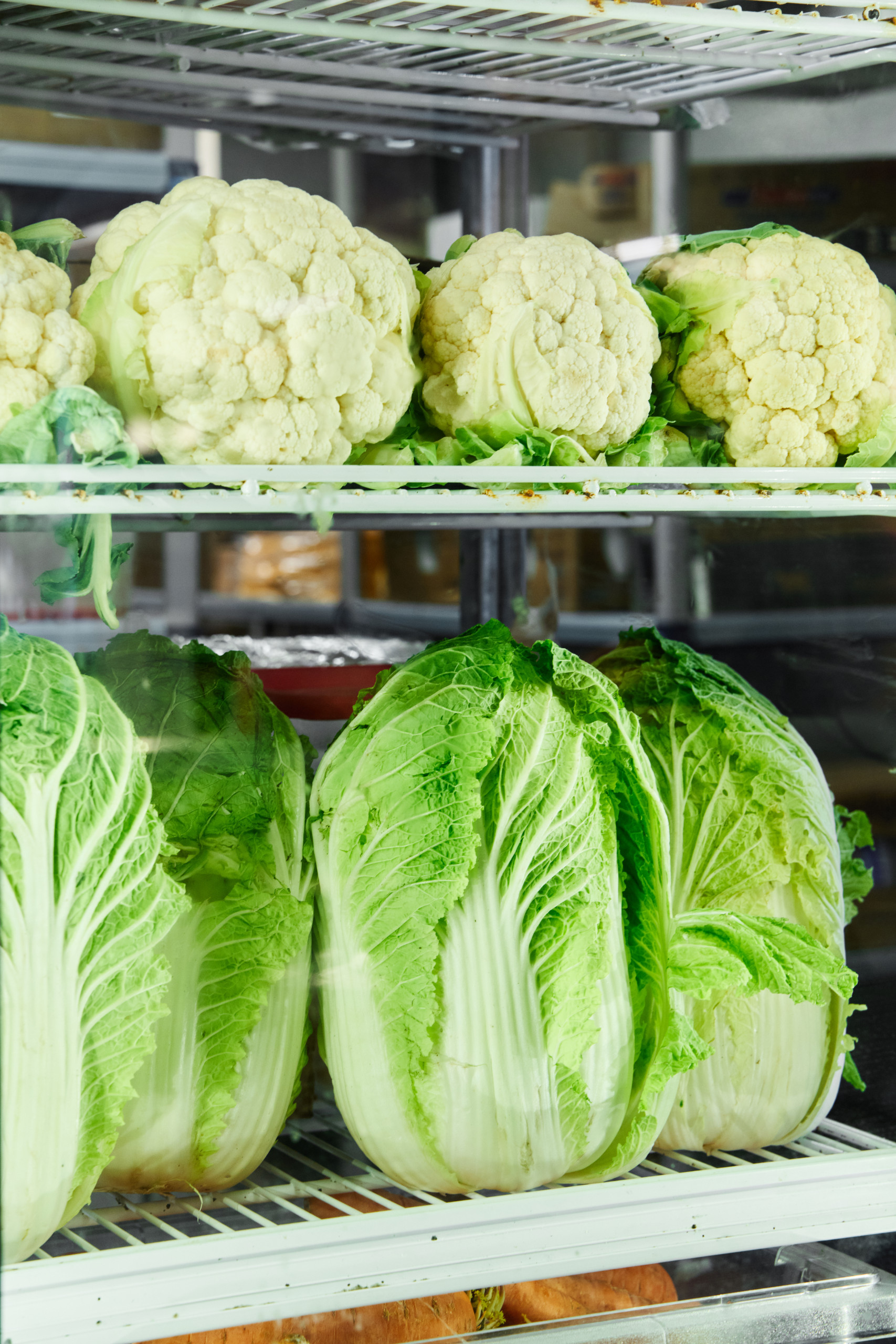
At Edwards Life Sciences in Irvine, CA, Senior Executive Chef Jon Sodini dunks whole heads of cauliflower in a brine accented with bay leaves and oranges. These flavors permeate the brassicas, and the brine helps it hold its shape better when slicing into steaks and searing.
Cure and Compress:
During the plant-forward trainings, teams competed in the “Battle of the Bacon,” to see who could make the best plant-based bacon. Many cures occurred! A light cure and a few minutes in the smoker, followed by some time pressed under a weight transformed carrots, eggplant, sweet potato, squash, and other vegetables into sides that could stand up to the most delightfully chewy, crispy, salty-sweet pork bacon.
Marinate:
Most chefs think nothing of giving skirt steak or chicken a bath in an herb-flecked, garlicky marinade. But vegetables? Most definitely, says Chris Lenza. “Taking the time to develop a robust, umami-forward marinade, and using that with your red potatoes, for example — it’s going to create excitement,” he says. “It’s going to sit with someone and make them think about that roasted potato in a different way.”
“People are like, ‘I’ve never had a pickled mushroom,’ but when they taste them — oh, man. They’re freaking amazing.”
Once the seeds of a movement are planted, they need to grow — and spread. For our culinary leaders, this means inspiring their staff to dig into the world of plant-based cooking. “It’s a huge opportunity for chefs to get creative,” says Terri Brownlee. “The world of plants is so broad and deep and rich that really, the possibilities are endless.”
Chefs and managers work to bring that sense of excitement and possibility back to their kitchens — and often, it’s reflected at them by staff whose cultural or dietary backgrounds make them familiar with plant-forward cooking, or by those who are naturally curious and experimental. Other times, it takes consistent effort in training and education to keep teams on point.
Here are some of our chefs’ tips for training and empowering their teams to take on plant-forward cuisine.
Tell the story:
Bon Appétit’s sustainability and wellness missions have been attracting team members to the company for almost 40 years. For many leaders in the field, telling our story has been a simple way to motivate and inspire staff. “I have a lot of fun with the story of what we do and how important it is. It’s helped people care and feel part of the big picture, that there’s more to it than just cooking food,” says Kimberly Triplett, culinary director, Gallaudet University, Washington, DC.
Empower your staff:
“Not everyone can step into the walk-in and do an episode of ‘Chopped,’” says Joe Dougherty from the University of Portland. “But we have a cool thing going on that’s collaborative,” he says. “I involve my chefs in the menu making process,” he says. “I empower them to try — and if you can get them into it, you know the food is going to be good.”
“I like to brew the Kool-Aid,” says Jon Sodini at Edwards Life Sciences. “I explain the process and do a lot of talking, overtalking, training, teaching, and tasting alongside the cooks,” he says. “When it’s working and people are doing well, I give a lot of praise.”
Tap their expertise:
“I’m super into eggplant right now,” says Paul Rosquita, executive chef at the Gates Foundation in Seattle. “And a big part of that was talking to Mohammed, my steward, who’s Egyptian and has tons of ideas for different things to do with it.” Rosquita’s staff from The Republic of Congo and Mexico have also shared ideas from their cultures. Managers also recommend strategic hiring. “One of our cooks is vegetarian/vegan. She works with the chef on things she likes to cook, and it works out great,” says Matthew Jones at Birmingham Protective Life.
Set expectations:
For one district manager in Northern California, it’s important to push teams to accept the challenge of creating dishes that are not only plant-forward, but allergen-friendly as well. “I’m often met with, ‘I don’t know how to do that, or ‘I’ve never done that before,’ and I don’t accept it,” she says.
“I think it’s important to have that collaborative process, and not really allow yourself or the people you work with to say something’s not possible. Collectively, she says, “Bon Appétit is a creative bunch — when we support each other, we can do anything. But we can’t do it if you automatically think it’s not possible.”
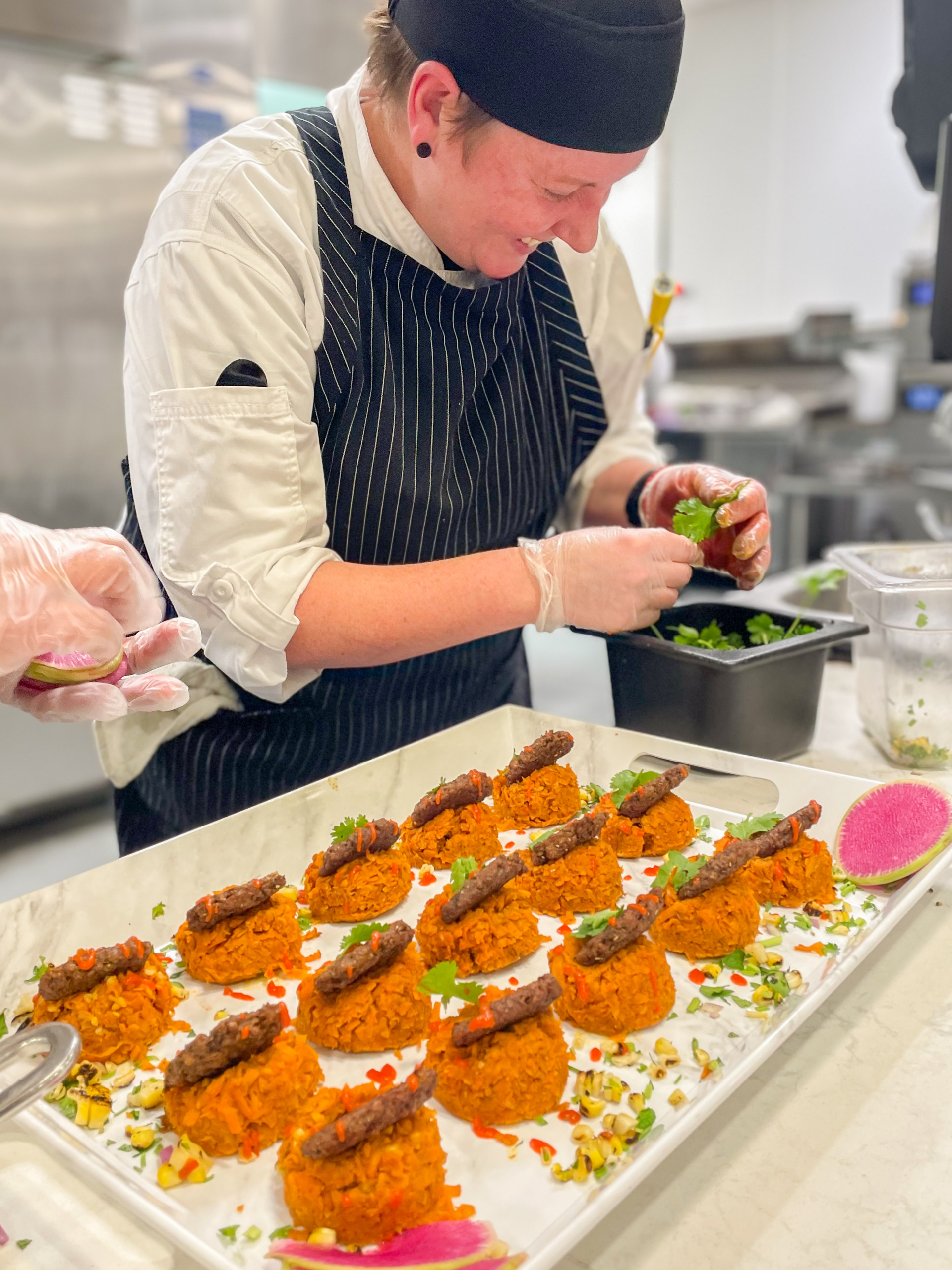
As we continue to spread the plant-forward love, teams are getting feedback, tweaking their approach based on what they’re hearing, and eventually getting more people excited about eating their vegetables. It’s not always a slam-dunk, as food choices are personal, people know what they like, and some are devoted to their daily meat-and-three.
A growing chorus of diners, especially at education accounts, is asking for more vegan and vegetarian options. Other guests need to taste it to believe it. “I love changing people’s minds about food,” says Jon Sodini, explaining how he slices okra in half vertically and roasts it on high heat to get it crispy, turning okra’s slippery reputation on its head.
Here are some tips our chefs shared for turning their guests on to a plant-forward way of eating.
Stealth-health it:
“If you call it vegan, they will not touch it,” says Suzanne Scalfaro, chef-manager at CBRE-Siemens. She gets creative with menu description for the “meat and potatoes people” at her account. Alongside her enormous salad bar stuffed with local produce of all kinds, Suzanne emphasizes salmon and chicken over beef and pork, “rather than push out the animal proteins altogether.”
Long live ROYGBIV:
At Starbucks in Seattle, SODO Kitchen General Manager Eric Battles focuses on color, texture, and temperature — and finds ways to contrast those elements on every plate. Cooking with color feels particularly impactful at his account, he says. “Anytime the plants on the plate are bright, vibrant, composed in any way — we see more traffic,” he says. “And we get more feedback when the salad bar is particularly bright.”
Keep it guest-centric:
“College students,” says Joe Dougherty, “are not going to stop eating crispy chicken fingers. We think about how we can make it about them and about Bon Appétit’s mission at the same time.” To that end, he says, they’ll shrink the portion of chicken and add an interesting salad or composed vegetable alongside. One concept that works well at the University of Portland, he says, is a bao bar, where small buns just so happen to fit less meat, with plenty of fun plant-forward fillings to join the fun.
Timing is everything:
Consider timing when launching a new station or program, says Grant Ruesch, executive chef at Colorado Christian University in Lakewood, CO. “Sometimes it’s hard in the middle of the semester to launch new things,” he says. “You don’t want them to feel like you’re taking something away — if they feel that way, they might be hesitant to try something new,” he says. Instead, Grant uses the quieter summer months to brainstorm new plant-forward ideas. He’ll launch those “in the fall, when you have a new class with first years who are all on the meal plan,” he says. “Catch them in the beginning and then that’s all they know.”
Tell the story (again):
“Education is huge, says Nick Walker, director of operations at Emory University in Atlanta. “You’ve got to get in front of it, tell your story about carbon footprint, about nutrition,” he says. “Being able to communicate with students and faculty and get buy-in so you can push your program is really important,” he says.
Finally, spread the love:
“If you love what you do, and you love being creative, plant-forward is the way to go,” says Art Ishman at Case Western Reserve.