At its core, the Zero-Waste Initiative focuses on maximizing every ingredient while minimizing kitchen waste in creative and unexpected ways. By honoring ingredients in their entirety, from roots to stems to peels, the program encourages culinary creativity and sustainable menu development while fostering meaningful team engagement.
For Chef Joanne, the inspiration for this initiative is personal. Reflecting on her grandmother’s resourceful approach to cooking, she says, “I wanted people to see ingredients for what they are and how we can best utilize them. In my grandma’s kitchen, she never threw out trimmings, every ingredient was so valuable.” This philosophy now guides her work reducing food waste at the Getty.
A creative challenge and a professional mission
Joanne’s experience in the culinary industry revealed just how significant the issue can be. “Because we start from scratch, there are so many trimmings, and the accumulation of waste can be daunting.” Rather than discarding those elements, Chef Joanne embraces techniques like poaching, dehydrating, and powdering peels and cores, transforming what was once overlooked into something delicious.
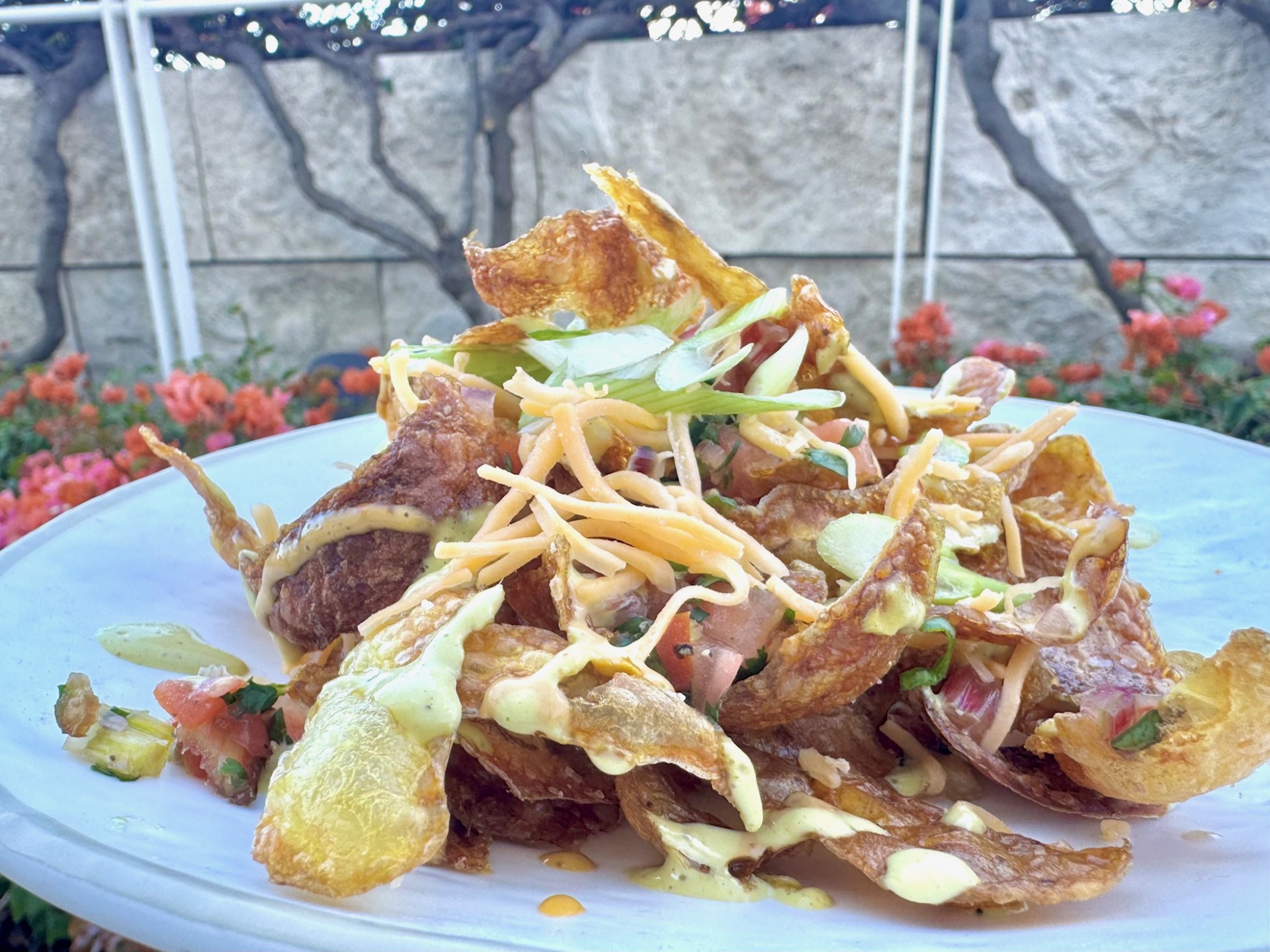
This philosophy came to life during the Getty’s Zero-Waste Recipe Contest, held this April, in celebration of Earth Month. The winning dish, Crispy Potato Skin Nachos (pictured above), by Cook Virginia Holland, exemplified the initiative’s impact. By repurposing potato skins, cilantro stems, lime zest, and other commonly discarded ingredients, Viginia turned scraps into a vibrant, flavorful experience.
Chef Joanne and her team also showcased additional zero-waste-inspired dishes, including Scallion Flatbread (Chinese pancakes) made from green onion parts that would normally be discarded. For dessert, they transformed leftover bread from sandwiches and bread service into delicious bread pudding, and created Orange Upside-down Cake that used whole oranges with house-made Honey-Orange Marmalade.
Beyond the plate, the initiative is shifting long-held perspectives. “When chefs cook, it’s often only the ‘best’ parts of ingredients. That’s been the definition of fine dining,” Joanne notes. “But that idea is old school.” Today, she’s helping redefine excellence in the kitchen, proving that creativity, sustainability, and respect for ingredients can go hand in hand.