Our teams are in overdrive, packing the days with special menus, events and activations designed to keep employees engaged and well-fed. Whether there’s a Bring Your Child to Work Day or a national heritage promotion happening, one thing a guest dining in the cafe may not notice: none of those promotional menus include beef.
In 2024, the team was working together to see how they could continue to push nutrition education and menus centered on whole foods to align with the company’s WELL certification.
As one step, the marketing team decided to test an idea: dropping beef from the promotional menus. “We thought, well that’s the future of where Bon Appétit is going, and it aligns with [the company’s] sustainability goals for 2030,” says Brielle Wann, director of marketing for the global account.
Kitchen teams across the company were already on a protein rotation to align with the WELL requirements, as well as to minimize repetition and inspire cooks to get creative with protein sources beyond guest favorites like beef and chicken. The protein schedule primed the culinary team to think outside the beef box, with assistance from Brielle’s team, who offered weekly suggestions to help engineer the menus, and reviewed all menus for compliance with members of the wellness team.
Making (Stealth) Moves
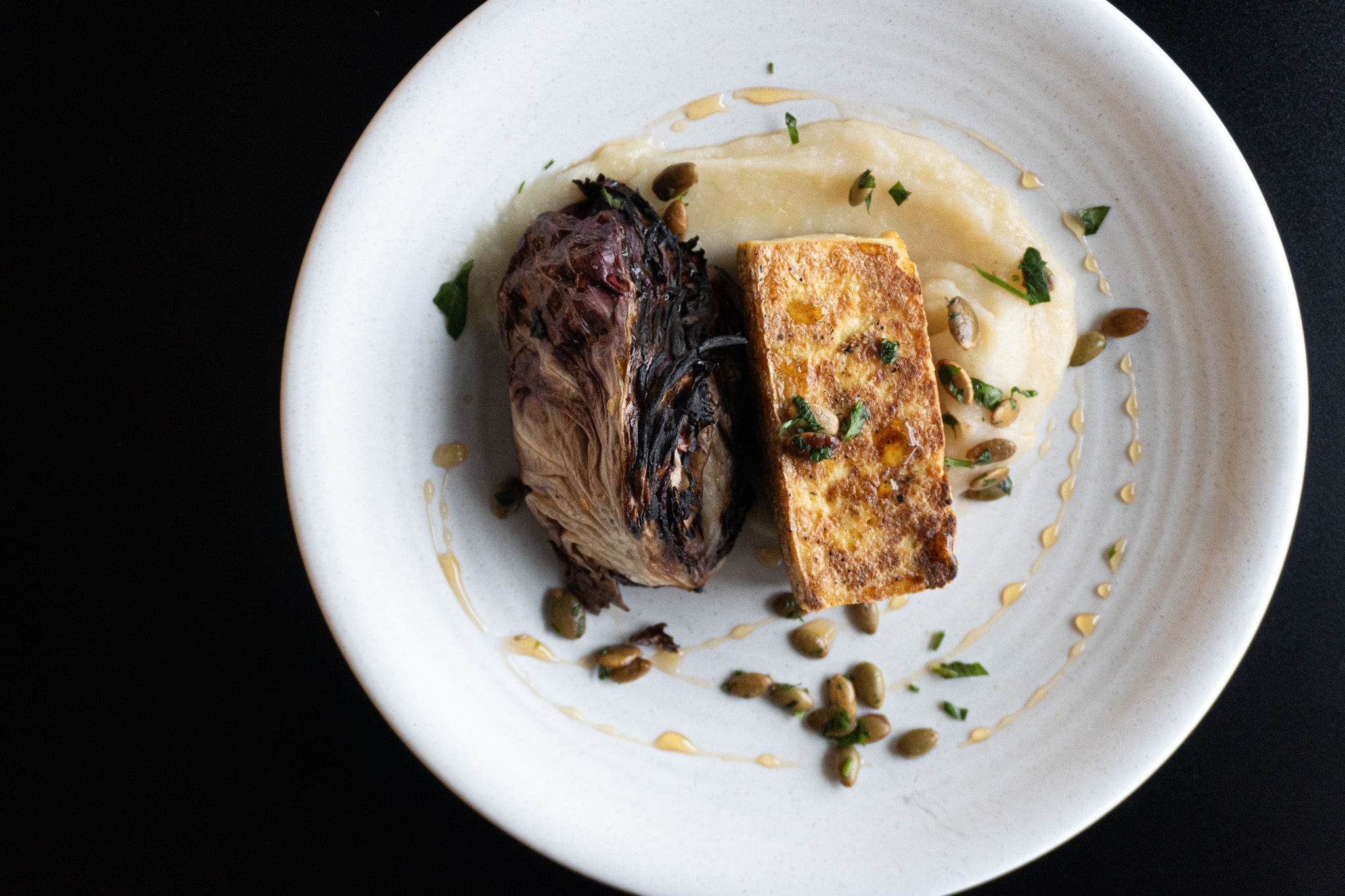
The marketing team decided to keep the menu shift quiet. Beef retained its modest presence in the menu rotation and protein schedule (even the weekly burger is a 50/50 blend of beef and mushrooms), and the team focused on building buzz and excitement around the alternatives featured in the promotions, whether those included other animal proteins or focused on plant-forward dishes like oyster mushroom and huitlacoche tacos or tea-smoked tofu with charred radicchio (pictured below).
[Dropping beef from menus] is the future of where Bon Appétit is going, and it aligns with...sustainability goals for 2030.
In the kitchens, chefs focused on pushing the creativity and innovation of their teams to “expand the accordion of flavors and techniques,” says Dominick Maietta, culinary director for the Mission Bay and Sunnyvale locations, “and get them out of their safe space of beef as a focal point.” To that end, the culinary leadership team worked with the ideas that marketing sent their way, while also sharing ideas from their own experiences, those from culinary influencers, and encouraging the team to experiment and play within the framework of swapping out beef.
In contrast to the uproar caused by an attempt at Meatless Monday at the account years ago, guests haven’t noticed the beef reduction, or at least they haven’t said anything, says Matt Campbell, vice president of operations for the account. Feedback on the food, whether face-to-face or through the digital system the team uses, has been positive, and another great way to motivate the cooks, says Tony Del Real, executive chef at the Sunnyvale location.
Measurable Feedback, at Scale
A little over a year into the project, Rosanne Cefalu, senior manager of client services, was working with Curt McClusick, Bon Appétit’s director of purchasing data and analytics, to prep data for an annual business report. She observed a significant drop in greenhouse gas emissions across the region when reviewing data in the Food Standards Dashboard. When checking with Curt and his team, she learned that in fact, the change in emissions was directly related to the reduction in beef purchasing. Encouraged by the shift and feedback, the national team continued to refine and deepen their commitment to reducing emissions through creative, strategic marketing and culinary efforts.
Today, beef purchases represent just 2% of overall purchases nationally at this account, compared with an average of 5% at comparable Bay Area tech accounts with a national presence. Strikingly, this purchasing shift has contributed to a 62% year-over-year reduction in greenhouse gas emissions. As they look ahead, says Rosanne, “we’ll continue for sustainability [purposes] to keep trying to reduce boxed beef and waste overall and keep tightening that.” Kudos to the team for the consistency and collaboration that have brought them to this accomplishment.