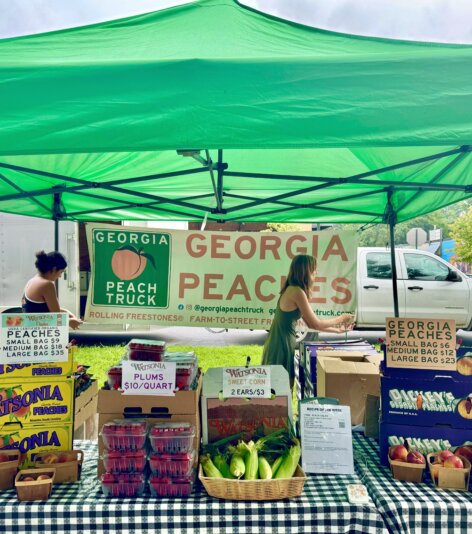
It was my first day as a farmers’ market vendor for a peach farm in Atlanta. Customers were excited about their fruit, and I was excited to be managing the stand alone. Suddenly, the sky darkened in the way it only does during the summertime in the South, and a huge gust of wind ripped the weights off my tent. The tent, boxes of peaches, and everything in the cash register went flying across the parking lot.
As I scrambled to handle the mess in the pouring rain, customers and neighboring farmers ran to my side, collecting fruit and helping me get everything under a nearby storefront. That chaotic moment was when I started thinking about a career in food. The support from those around me at the farmers’ market was so warming, and my first day grew into a summer of laughing with those farmers and customers about the tent incident.
I loved the community there– one built on a shared love of fresh, local food. It was meaningful to bring people not only delicious produce but also a relationship with someone who could tell them how it was grown. When the summer ended, I wondered how I could turn that feeling into a full-time career.
From Summer Job to Career Path
Back at school, I turned to environmental science to understand food systems from a new perspective. The next summer, quantitative research took me from Atlanta farmers’ markets to fisheries in Portland, Maine. The first advice I received there was not to tell anyone I didn’t like seafood, which was hard, since most conversations at my fisheries research organization revolved around fish. But I grew to love the seafood I tried that summer: the freshness was so different than anything I had tasted in my landlocked hometown, and my mission to research climate change’s impact on shellfish populations became more personal.
Like the peach stand, the job had its challenges. Without a science background, I had never done surveys on the water or hiked with heavy research equipment.
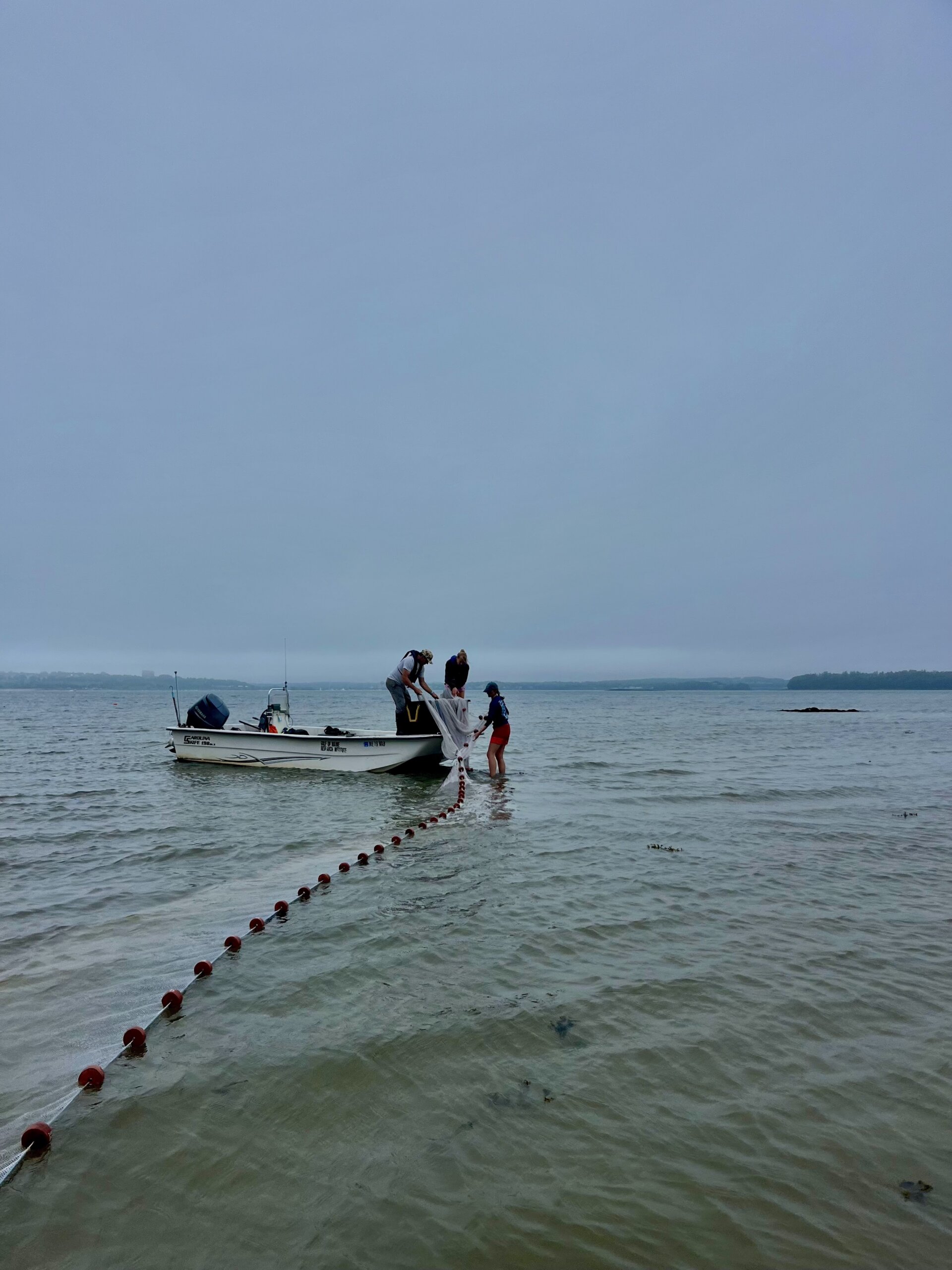
On my first trip out on the boat, I fell into a patch of mud on the shore and sank to my knees. Just as during my farmers’ market fiasco, people around me came to my aid. My coworkers pulled me back into the boat and reassured me they had all made the same mistake. That support, from being physically pulled out of a sticky situation to getting extra feedback on my work as someone new to science, motivated me to keep working with food and the environment.
Through these experiences, I’ve learned what is most fundamental to food systems: relationships. From the connection between a farmer and their customers to the one between scientists and the fishermen whose livelihoods they fight to protect, relationships help make our food systems more equitable, direct, and sustainable.
A System of Care
As I begin my time as a Fellow, I’m excited to keep building relationships with others who are passionate about food and the environment. When I envision the food system I want to see, I imagine a system of care where everyone asks: where can I jump in? Social activist Naomi Klein writes: “The task is clear: to create a culture of caretaking in which no one and nowhere is thrown away, in which the inherent value of people and all life is foundational.”
In my first few school visits, I have already seen that care in action: in chefs who make sure everyone has access to meals that nourish them, in students working to build better waste management systems for their communities, and in the everyday interactions within dining halls. One of the most joyful and special parts of my college experience was the meals I shared with my friends three times a day, and it’s important to not underestimate the difference in a wonderful meal to make those moments special.
I’ve always loved Mary Oliver’s sentiment that “joy is not made to be a crumb.” Small moments of care and joy– a coworker pulling you out of the mud, a dining hall dinner with an old friend, or a heaping plate of local, fresh food— are not small in their impact.