Most build flavor with familiar ingredients: a pinch of salt, a sprinkle of sugar, a pat of butter. But in many Bon Appétit kitchens, chefs go beyond the expected, turning common ingredients into flavor powerhouses. Mushroom stem powder. Dehydrated Satsuma mandarin peel. Charcuterie dust.
Developing techniques to coax flavor out of ingredients and dishes is part of the craft. “Flavor isn’t [always] enhanced by adding more [of it],” explains Joanne Ponvanit, Executive Pastry Chef at Getty Center and Getty Villa, “but by adding texture, acidity, temperature variation, or aroma. It’s why roasted strawberries taste different from fresh strawberries, or why roasted carrots develop sweetness and depth.” It’s all in the technique.
Dehydrating and Powdering
“Is there really anything better than a tomato at the height of tomato season?” asks Nicolai Tuban, culinary director at Sand Hill Kitchen in Menlo Park, CA. “How do we [preserve] and translate that flavor into our dishes year-round?” For him, the answer lies in dehydration.
When dehydrating a ripe tomato, you remove moisture and concentrate sugars, acids, and natural flavor compounds. The result is an intense, highly concentrated version of that perfect ingredient. Grind it into a powder and sprinkle on a tomato salad, and “you are reinforcing everything that’s great about that tomato.”
At Sand Hill Kitchen, the kitchen staff applies this flavor-enhancing method to more than fruits and vegetables. They dehydrate and crush leftover charcuterie trim into a semi-coarse powder, concentrating the flavor and umami. What’s left is a magical charcuterie dust that when sprinkled on a caprese salad, roasted cabbage, or a pizza, transforms into what Nicolai calls “porky deliciousness.”
The kitchens at Sand Hill rely on a handful of tried-and-true powders: vegetable scrap powder, citrus powder, charcuterie dust, and “Bruno.” Yes, that’s right, and they don’t talk about Bruno, except to say, that this addictive seasoning for French fries is a powdered mélange of dehydrated mushrooms, seaweeds, garlic, onion, and salt, made especially for those with a salty-umami obsession.
Experimenting with contrast
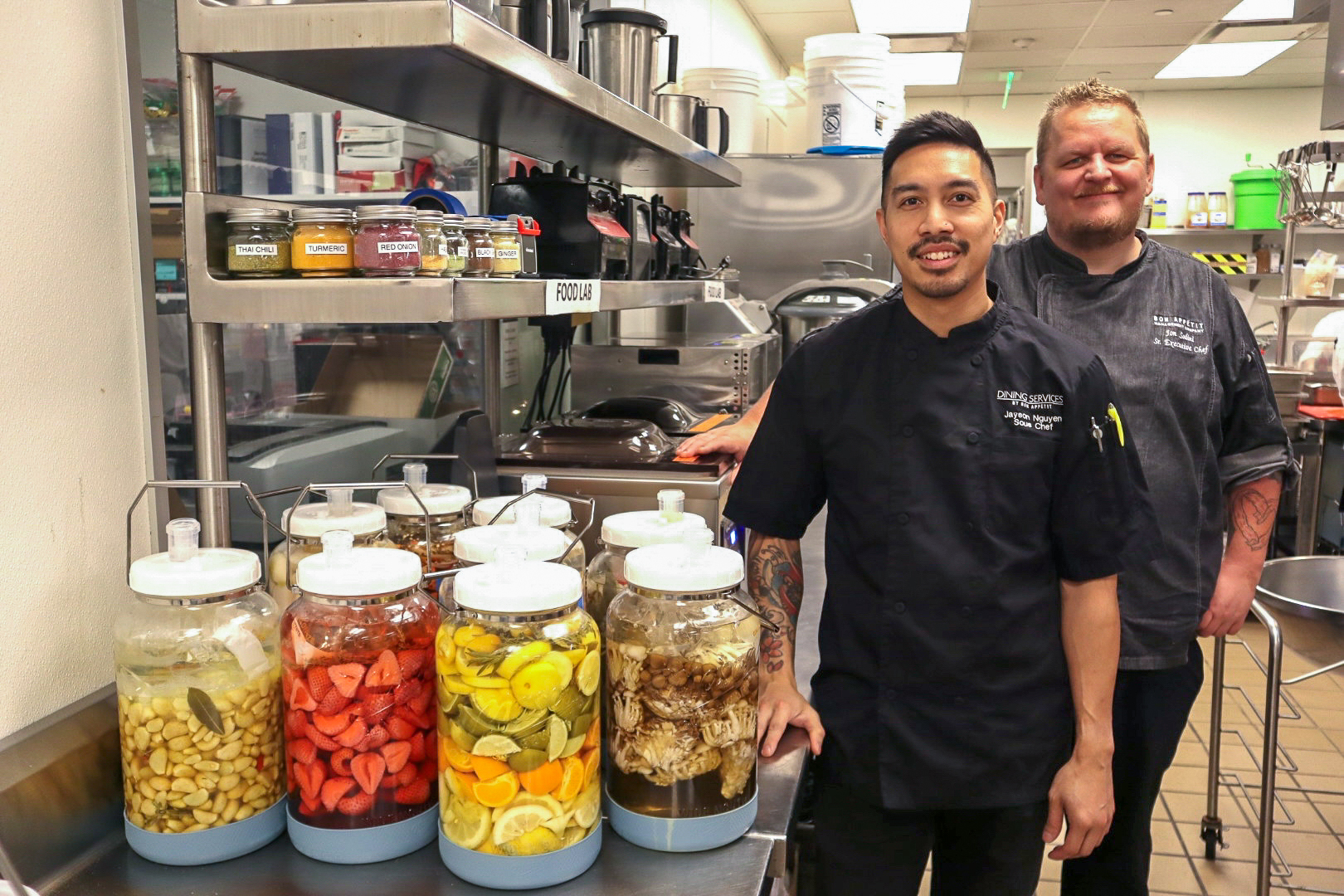
At Edwards Lifesciences (ELS) in Irvine, CA, Sous Chef Jayson Nguyen is in experimentation mode. The mushroom stem powder he recently developed is now the base for a vegan furikake used to garnish sushi. He’s also repurposed scallion ends by charring and dehydrating them to create scallion ash. Mixed in a garlic aioli in place of fresh green onions, the ash adds a spicy, smoky earthiness, and an aromatic char, which he acknowledges is “closer to barbecue than fresh herb.”
For Jayson, flavor goes beyond the five elements of taste: sweet, salty, sour, bitter, and umami. “It’s what you smell, how it tastes, the viscosity, and the mouthfeel.”
He watches for contrast. The intense citrus aroma of powdered Satsuma mandarin peels releases a vibrant but slightly bitter taste into his orange chicken sauce. The sweetness of the pineapple pulp from the juice bar balances the sour notes from rice wine vinegar to give the teriyaki sauce a tangy lift. The pulp also serves as a natural thickener for the perfect mouthfeel.
Scraps at ELS get a second life. The pantry is bursting with powders made from mushroom, ginger, and beet trimmings as well as turmeric pulp that otherwise would go to waste, saving the kitchen hundreds of dollars in spice purchases every quarter.
For Jayson, flavor goes beyond the five elements of taste: sweet, salty, sour, bitter, and umami. “It’s what you smell, how it tastes, the viscosity, and the mouthfeel.”
Fermenting
Chef and General Manager Michael Cleary, along with Sous Chef Kenny Tribett, introduced a fermentation station at St. John’s College in Annapolis, MD. Students happily sample from a daily curated assortment of house-made pickled and cold fermented vegetables, like pickled beets and cucumbers, giardiniera, kimchi, and sauerkraut.
Michael is proud of how his team elevates the flavor profile of sauerkraut. They start with a typical base: a mixture of brown and yellow mustard and coriander seeds, caraway, and fresh herbs like dill, and carrots. They add fresh turmeric for bright flavor and color for a vividly hued sauerkraut. For an added punch, Cleary saves what he calls his most essential flavor bomb, caramelized onions. Added to the kraut and served with sausages, “there’s a sweetness as well as a savory depth. Whether they’re vegan sausages or pork, it’s beyond delicious.”
Charring
Chef Nicolai wishes that bitter flavors weren’t an afterthought. They add complexity, especially when intermingled with something sweet. Take radicchio; caramelize it in butter or oil and drizzle a maple syrup or honey-based dressing. A bittersweet combo.
He hopes to make the taste more accessible and recommends keeping a little char on your peppers when you roast them. “Those carbon compounds are going to create a little bitterness. In a salad, the sweetness of the blistered pepper, the bitterness of the char, parsley, and olive oil, the sourness of the lemon, and the saltiness of the chunky sea salt and anchovy play together so nicely.”
After years of cooking, Nicolai has learned what works. “That’s where the fun is. Once you understand what an [ingredient] can do, you can freestyle from there.”
“That’s our contribution [as chefs],” he adds. “Some processes take time, but it’s so worth it to make sure it tastes really good.” Full of flavor, indeed.