One of the many essential partners that help ensure our culinary teams have access to reliable, high-quality products is local food hubs. The role of food hubs is to aggregate and distribute local food from small to midsize farms, which seamlessly streamlines the delivery of fresh, sustainable food to the communities and institutions we serve.
We had a chance to chat with a few food hub partners that we work with across the country, including The Common Market, a longtime partner with national reach, and Gorge Farmer Collective, based in the Columbia River Gorge in the Pacific Northwest.
The Common Market
The mission of The Common Market is to connect communities with good food from sustainable family farms while also building vibrant regional food systems. As a nonprofit regional food hub and distributor, they operate across four regions: the Mid-Atlantic, Southeast, Texas, and Great Lakes with growing footprints in New York, Michigan, and the Carolinas.
They work with over 300 family farms to support schools, hospitals, universities, and corporate dining programs to provide fresh, local food while helping farmers access markets that value where and how their food is grown.
According to Marketing and Communications Director Caitlin Honan, “The partnership with Bon Appétit Management Company is one of our longest and most meaningful,” going back to 2010 when the team at the University of Pennsylvania first started sourcing through The Common Market. “Fifteen-plus years later, that relationship has grown right alongside us: Bon Appétit-served colleges, universities, cultural institutions, and corporate offices across the country now source through The Common Market, and it’s been a genuine two-way partnership.”
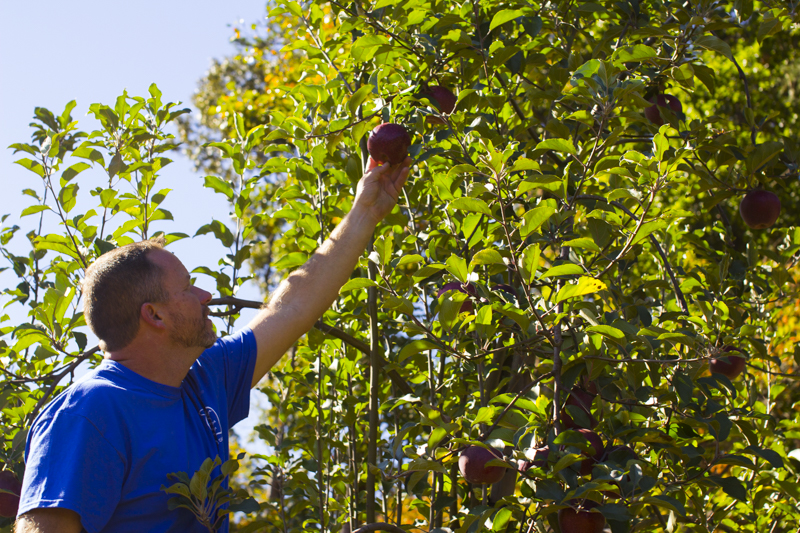
What makes this partnership work is our shared commitment to small producers in many of the regions where we operate. Our Bon Appétit teams at places like Emory University and Wheaton College continue deepening their longstanding relationship while newer accounts come onboard as their reach expands, like the Obama Presidential Center and Furman University. Each of these accounts get access to local products like Phoenix Bean tofu (Chicago, IL); Greener Pastures organic chicken legs (Elgin, TX); BJ Reece apples (Ellijay, GA); and Happy Valley Meat ground beef (Mount Joy, PA) to name a few.
Honan explains, “We see ourselves as the connective infrastructure regional food systems need but rarely have: the aggregation, distribution, and technical support that lets small and mid-sized farms actually reach institutional buyers at scale. Our goal is to prove the model is replicable – that a resilient regional food economy is buildable anywhere there’s the will to build it.”
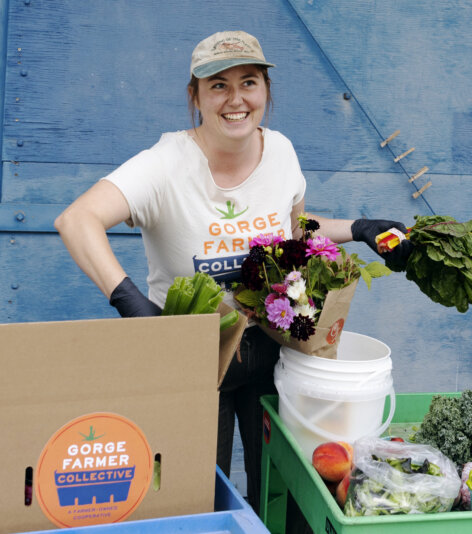
The Gorge Farmer Collective is a cooperatively-owned and -operated online marketplace. Established in 2020 by a small group of farmers with a big vision, they strive to make shopping for locally grown products easy for their retail and wholesale customers. Today they are led by 25 member-owners and work with over 80 producers across the Columbia River Gorge to serve schools, healthcare systems, restaurants, and other institutions who need reliable, locally sourced food at scale.
As Institutional Sales Lead Abigail Blinn explains, the collective’s ownership model makes them unique: “Because we’re farmer-owned, we’re not a middleman extracting value from the system; we’re an extension of the farms themselves, built to handle the logistics so individual growers don’t each have to reinvent aggregation, delivery, and institutional sales on their own.”
Each week, our Bon Appétit chefs place their orders for the week ahead, and the following week, that order arrives fresh from dozens of Gorge farms in one delivery. This creates a steady, predictable pipeline of local food moving from their farmers’ fields straight into our kitchens without each kitchen having to manage relationships and logistics with dozens of individual growers.
Blinn shares, “this is exactly the kind of partnership we hoped wholesale would create: a major food service operator gets a streamlined way to bring genuinely local products into their kitchens, and dozens of our farmers get access to a market that would be nearly impossible for any one of them to reach on their own.” And the impact of this broad collaboration is magnified: “The bigger our wholesale and institutional reach grows, the more resilient the whole regional food system becomes — more dollars staying local, more farms able to plan around reliable markets, and more eaters with real access to what’s grown around them.”