The Farm is a one-acre sustainable agriculture project managed by Butler’s Office of Sustainability. Since breaking ground in 2010, it has served as a living classroom, a model for sustainable urban agriculture, and a source of campus-grown produce. Today, its food is sold directly to Bon Appétit for use in campus dining, creating a direct line from campus soil to student plates.
In a campus dining program, peak flavor and abundance don’t always coincide with the dining program’s busiest times. Some of the farm’s largest harvests happen during quieter summer months, when many students are on summer break, and café traffic is lighter. Having a plan for preserving the harvest gives the Butler Dining team a chance to capture those ingredients at their peak and use them when the full campus community returns.
Locking in Flavor
“Pickling, freezing, and other preservation methods are huge for us,” said Stephen Scott, Butler Dining’s campus executive chef. “The farm has abundant crops during months when we may not have as much café traffic, so preservation lets us carry that freshness outside of the quieter summer months.” The techniques extend the useful life of the harvest, but they also retain the qualities that make a particular crop worth using in the first place.
Take dill and campus-grown garlic as an example. Butler Dining chefs use both to build flavor into pickled produce, making the farm’s herbs and aromatics the backbone of café-ready ingredients. The result carries flavor from one crop into another and eventually onto student plates.
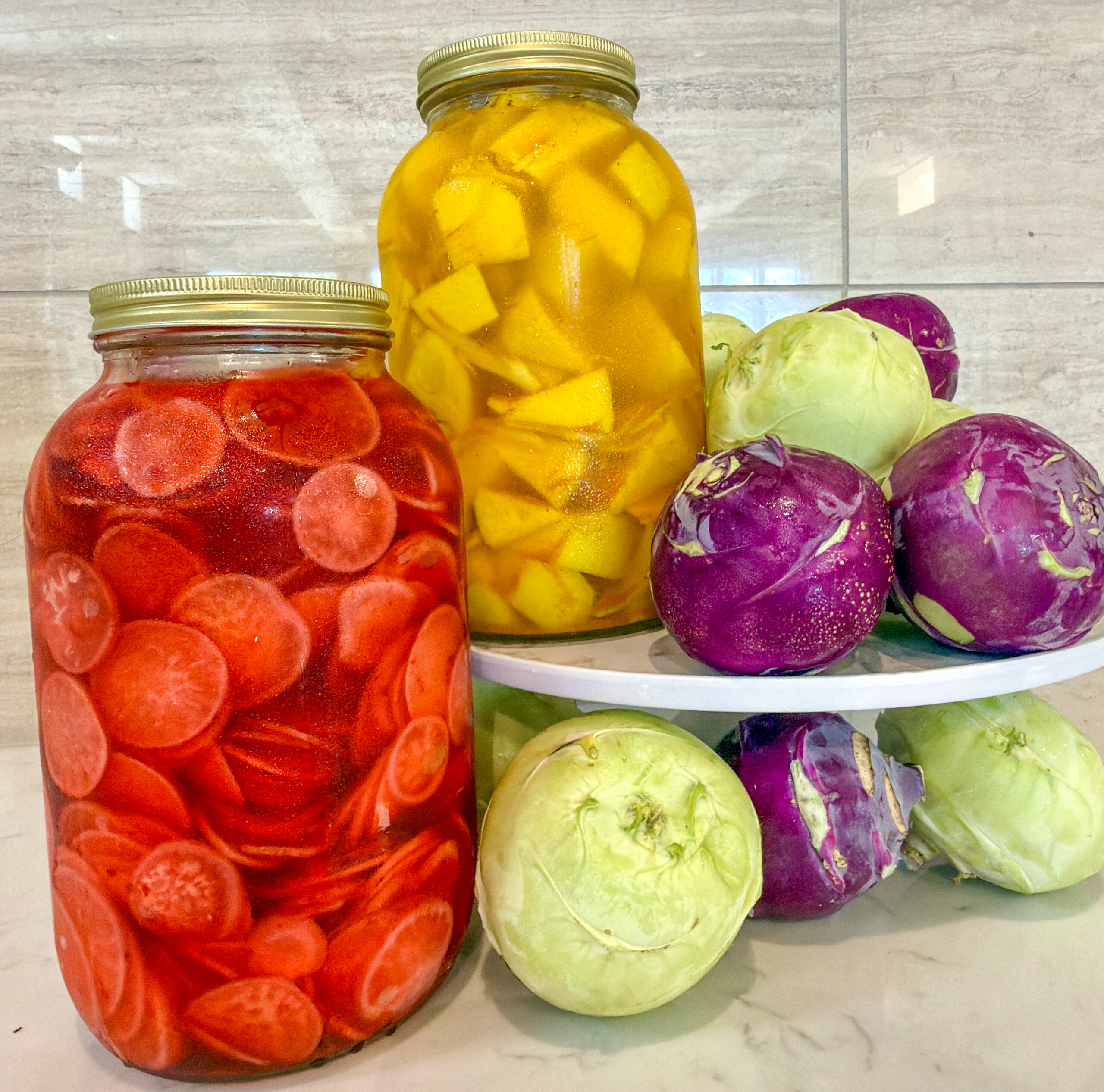
The culinary team has already frozen kale from The Farm for future soups, sautés, sauces, and seasonal café features. Radishes and kohlrabi are being pickled in sweet-and-spicy and bread-and-butter preparations that can bring crunch, brightness, acidity, and contrast to future menus.
The Power of Proximity
The proximity of The Farm also allows chefs to see what is growing, understand when ingredients will peak, and plan their use before the harvest reaches the kitchen door. A bumper crop can become a preserved ingredient. A row of herbs can become the foundation for a brine or sauce. A short-lived seasonal flavor can be incorporated into a future café feature.
Visits to the nearby farm give chefs the chance to walk the rows with Farm Manager Tim Dorsey, talk through crop timing, and consider how ingredients could move through the dining program. Some crops may be best served fresh and simply prepared. Others may be suited to a station feature, small-batch tasting, catering menu, or special café activation. The partnership gives The Farm a direct campus market for the food it grows and gives the culinary team a local, seasonal ingredient pipeline, which, in turn, students encounter in their daily visits to the café.
An Abundance of Benefits
Campus dining can make food-system ideas tangible. Students may encounter The Farm through a class, research project, volunteer opportunity, or on awalk past the fields. They may also encounter it through a meal: a sauce, a pickle, or frozen summer kale folded into a later dish. Those ingredients connect a meal to the land around campus and to the work required to use a harvest well.
Preservation also supports a practical approach to sustainability. When a crop is abundant, the goal is to use it thoughtfully, reduce waste, and extend the harvest beyond a brief window of availability. The Farm’s produce does not disappear from the menu simply because the season moves quickly or campus traffic slows for the summer.
At Butler, preservation helps the dining team extend the harvest and bring campus-grown ingredients into student meals throughout the year. Flavor starts outside the kitchen. The craft is carrying it forward.
Kevin Asselin is the senior marketing specialist at Butler Dining.