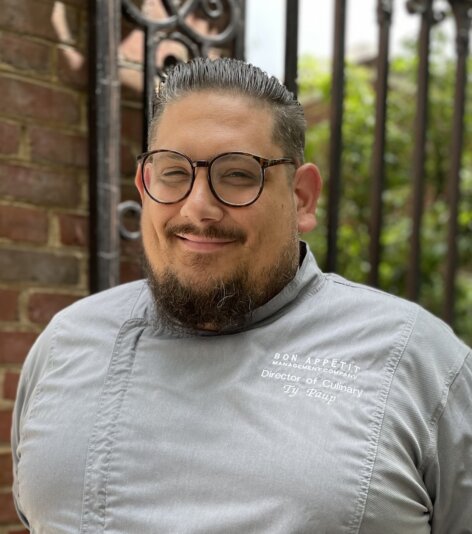
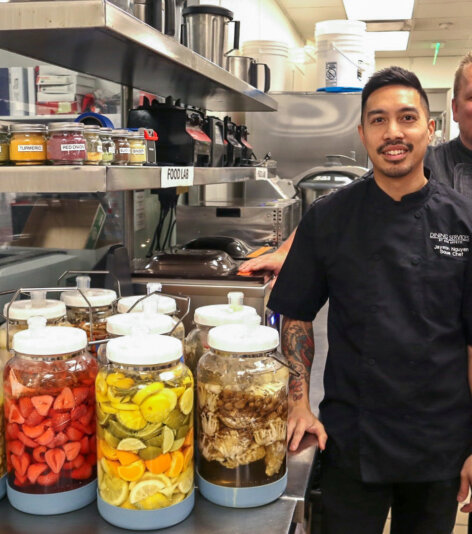
As I walked out to the parking lot, I talked with General Manager Shannon Null and Executive Chef Nimal Amarasinghe (above) about the fun to come in the next two years, as well as the challenges of operating an account like Whitman while keeping sustainability at the foundation of the work. I realized that Shannon and Nimal already felt like good friends, despite only meeting them 96 hours earlier.
That memory came back to me again and again as I grew into the fellowship. Sustainability is incredibly important, but commitments do not carry out themselves. They become a reality because people work behind the scenes to source thoughtfully, cook from scratch, reduce waste, educate guests, build partnerships, and push their accounts forward. This idea became more and more powerful of an idea with every trip.
I loved speaking in classrooms about carbon reduction, responsible fishing practices, farmworker rights, and what it means when we call an ingredient “local.” But to me, nothing was more impactful than meeting the people who put those commitments into practice and helping tell their stories. Between chefs, managers, regional foragers, farmers, artisans, students, and sustainability partners, I’ve lost count of all the wonderful people I met. On that note, my three main lessons to share are all people focused.
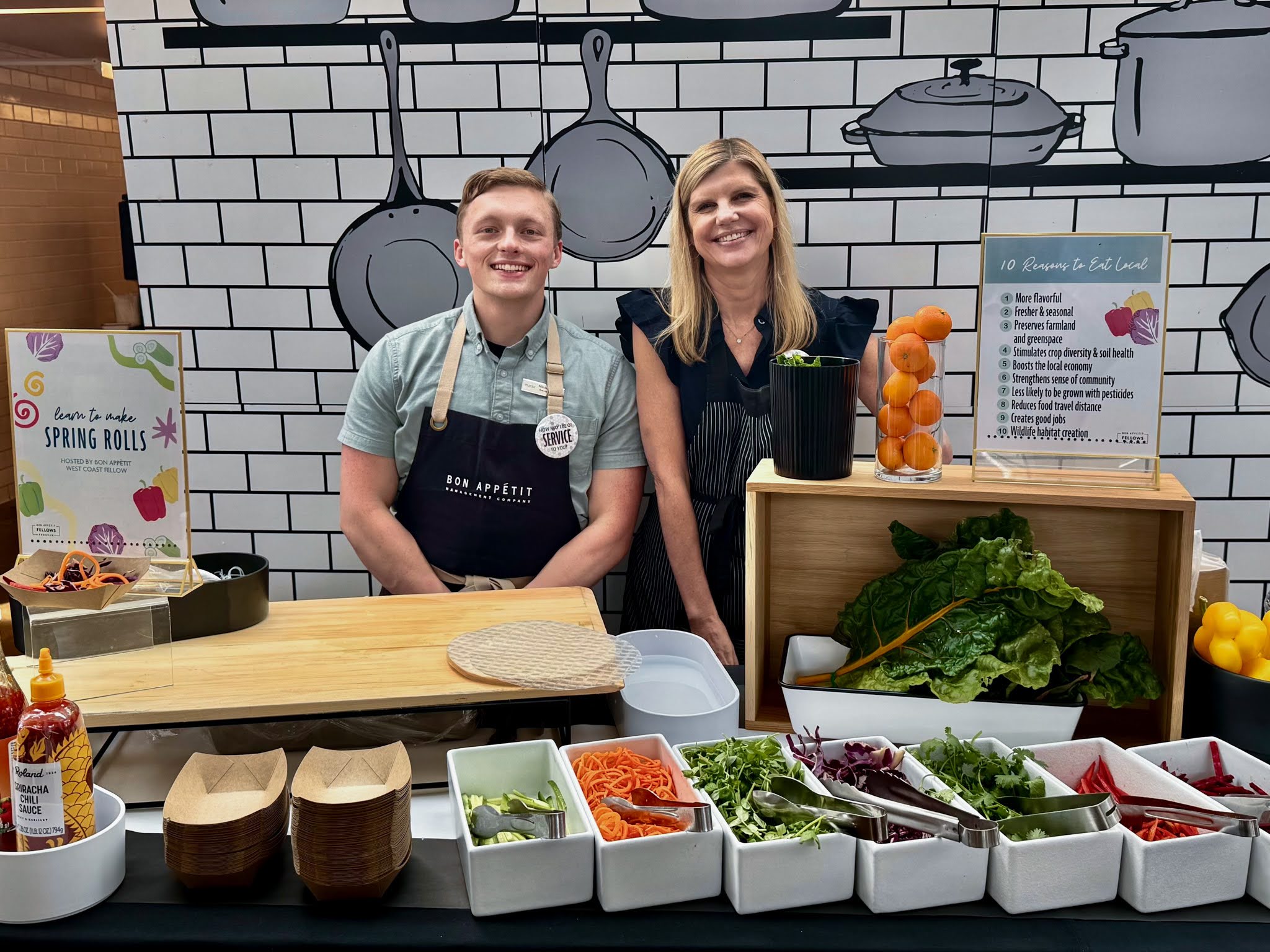
Lesson One: Sustainability Is a Team Sport
One of the first things every fellow does is develop a Story Behind the Food presentation, a full story of how sustainability builds the foundations of our operations. Creating the presentation taught me all about the policies and commitments to making “Food Service for a Sustainable future” a reality. Traveling taught me how complicated turning those commitments into action can be.
Higher ed provided many opportunities to see this lesson in action. I saw it at The Claremont Colleges. Managers and chefs worked alongside campus sustainability staff and student Eco-Reps on food-waste education, composting, and reusable-container programs. Student leaders brought energy and ideas, account teams helped turn them into workable programs, and collaboration allowed successful practices to spread between campuses.
I saw it again at Pacific University, where sustainability extended far beyond the walls of the café. During my visits, I met with the campus Sustainability Office, the Zero Waste team, Student Senate representatives, students studying environmental systems, and Ron Calkins, who helps coordinate both the Boxer Food Share pantry and the campus garden. Each group approached food from a different perspective, their work often overlapped, and I saw that sustainability is not one isolated program; it is a network of people combining their knowledge and resources to support the entire campus community.
The fellowship taught me that no one person can “do sustainability” alone. The most meaningful changes happen when people understand the role they can play and are invited to participate.
Lesson Two: A Friendly Face Opens the Conversation
Of course, inviting people to participate raises another question: How do you get them to the table? As a fellow, I often arrived on campus as an unfamiliar face asking students to stop, talk, taste something different, or think about a complicated issue during lunch. I learned that the most effective icebreaker was a familiar face from the account team standing beside me.
At Reed College, (General Manager) Mike Bucuvalas and Executive Chef Jesse Fairman helped draw students toward local Farm to Fork vendors, making introductions and connecting the farmers’ work to foods students recognized from the café during a massive Earth Day festival. At Colorado College, Executive Chef Edward Salazar could make a complicated subject like purchasing standards tangible by explaining how those decisions affected the ingredients on students’ plates. At the University of Portland, General Manager Ken Clemens helped me draw in so many students simply by knowing and remembering hundreds of guests so that he could personally greet them and showcase the pop-up.
These team members understood their campuses. They knew which topics would resonate and helped guide what my week should look like, what would stick with our guests. Their presence gave me credibility, but more importantly, it showed students that sustainability was more than just a visiting fellow’s temporary project; it was part of the account’s everyday culture.
Lesson Three: Connections Turn a Company into a Community
The fellowship is full challenges, but it was always easier once I learned I was rarely entering a place where I had no connections at all. Across the country, I met people who had worked together at previous accounts, gone through major openings together, cooked through enormous events, or remembered one another from years earlier. Mentioning a chef or manager could unlock a collection of stories and immediately make a new place feel familiar. Those connections created continuity across campuses sometimes separated by hundreds and hundreds of miles.
As a fellow, I got to be apart of that spider web of connections, meeting these amazing people, sharing stories of your travels and the people that you’ve met, making new mutual acquaintances and feeling like this place so far away from your home has some friends there after all. Aside from helping you stay sane when visiting a dozen states across a year, it also becomes an integral part of your job. Knowing subject matter experts gives you a perfect “I know a guy for that” for many situations.
Even during the busiest moments, those connections and relationships shapes our culture. At the Institute of American Indian Arts, during a busy week of major campus events and a presidential inauguration, General Manager Lizet Marquez Rico made sure the team could sit down to a family-style meal after serving everyone else. That gesture stuck with me because it reflected what I saw throughout the entire company: hospitality was not only reserved for guests.
The fellowship was tough at times, but it has also been one of the best opportunities of my life. I encountered complex food-system issues firsthand, sometimes directly from farmers, artisans, chefs, and advocates working through them every day. I learned how purchasing decisions can support local economies, how waste data can spark behavioral change, and how good food can make difficult conversations approachable.
As I wrote when I started the fellowship, I’ve always been inspired by Anthony Bourdain’s quote, “you learn a lot about someone when you share a meal together.” I’ve had the chance to dine with managers, team members, guests, sustainability groups, and after all those meals, the idea resonates more than ever.
The meals, programs, and commitments matter. But what I will carry with me are the people gathered around the table, and the knowledge that lasting change begins when we make room for one another there.