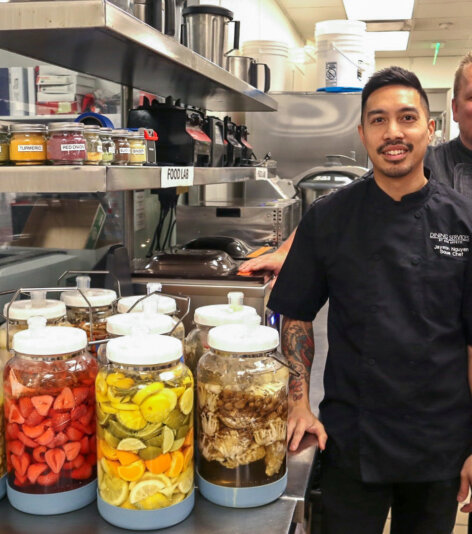
Sous Chef Jayson Nguyen first noticed the vibrant pulp headed for compost and saw possibility instead of waste. Curious about the flavor potential locked inside, he began experimenting. By dehydrating the leftover turmeric and ginger at 135°F for 12 hours, he yielded a deeply aromatic, brilliantly colored powder. “In terms of freshness and intensity, this powder did better than many of our purchased spices,” says Jayson.
That spark of curiosity soon became a full-scale collaboration. Partnering with the juice bar, the ELS culinary team established a system to regularly collect fruit and vegetable pulp for repurposing and experimentation. Former food waste is now fueling a growing library of house-made ingredients that bring both sustainability and flavor to the forefront.
The team quickly expanded beyond turmeric and ginger, successfully dehydrating celery, carrot, and beet pulp into vibrant powders and seasonings. Pineapple pulp found a second life as well, blended and strained into naturally sweet additions for Hawaiian-inspired dishes and house-made sweet-and-sour sauce.
"I'm incredibly proud of Jon, Jayson, and the team for bringing a true root-to-stem philosophy to life. What started as simple experimentation has evolved into a program that challenges how we think about ingredients and showcases the remarkable creativity of our culinary team." -Rene Adame, Director of Corporate Dining, Edwards Lifesciences
Immediate Impact on the Bottom Line, Food Waste, and Creativity
Within a single week, the kitchen produced enough dehydrated spices to eliminate the need to purchase ginger, turmeric, and celery seed altogether, generating an estimated $150 in weekly food cost savings.
Today, many scraps at ELS get a second life. Mushroom stems and scallion bottoms are saved and transformed. Satsuma orange peels are now a key ingredient in a signature California barbecue spice blend. The team repurposes red and yellow onion skins into house-made onion powder, while sweet potato skins help activate vegan kimchi fermentation.
One of the team’s favorite discoveries came from the satsuma peels themselves. “They’re one of the most surprising ingredients in the whole program,” says Jayson, citing their intense citrus aroma, vivid color, and versatility across applications.
Since the end of 2025, the program has diverted more than 550 pounds of material per month from compost waste streams. The initiative demonstrates how thoughtful culinary innovation can create meaningful environmental impact without sacrificing flavor or creativity.
A Growing Roster of Culinary Innovations
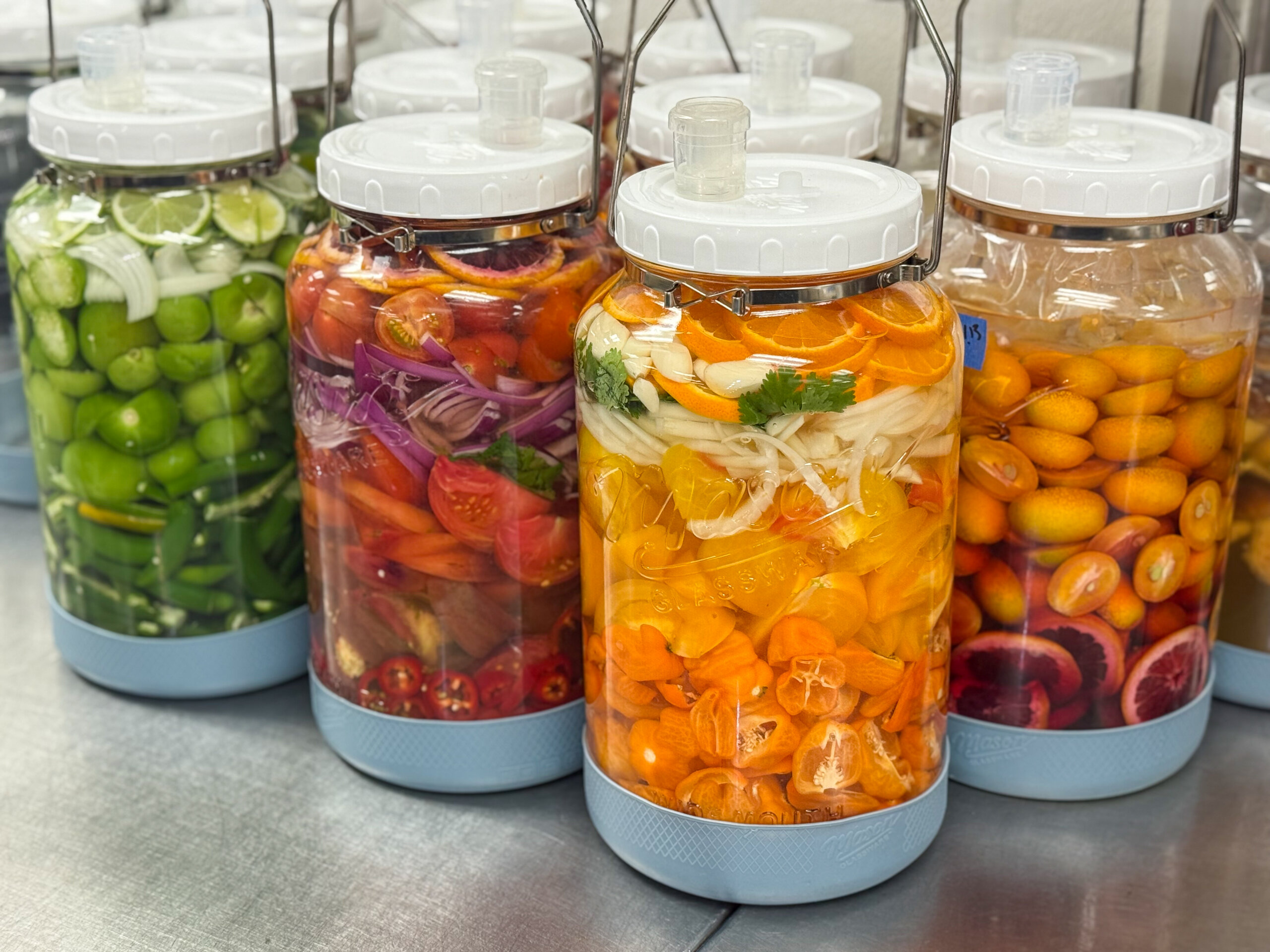
The initiative has also expanded into fermentation, supported by ELS Director of Corporate Dining Rene Adame, whose investment in two additional commercial dehydrators and multiple fermentation jars helped scale the program significantly.
Today, the team has developed two standardized fermentation methods based on vegetable water content, carefully monitoring pH levels on day three and again at completion to ensure both consistency and food safety.
Their fermentation lineup continues to grow, featuring items such as giardiniera, Nantes carrots, heirloom cherry tomatoes, and layered “sauces in a jar,” each fermented for approximately ten days before final processing.
At its core, the project reflects a culinary philosophy that maximizes flavor, minimizes waste, and honors the full potential of every ingredient. Through dehydration, fermentation, and relentless experimentation, Senior Executive Chef Jon Sodini and Jayson are proving that sustainability, creativity, and innovation can thrive side by side and taste incredible doing it.