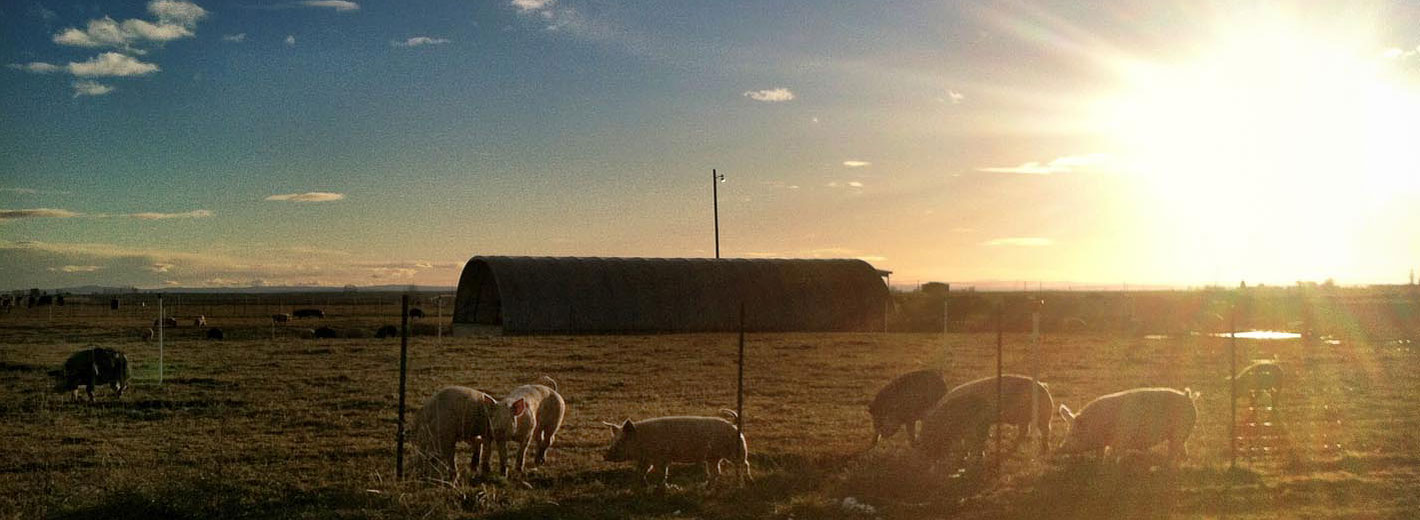
Animal Welfare
At Bon Appétit, we believe that to be sustainable, the U.S. food system requires major, continuing improvements in how the animals we eat are raised.
The vast majority of farm animals are crowded together in confined spaces, routinely given antibiotics, and fattened as fast as can be managed. Few are truly permitted to enjoy the Five Freedoms of animal welfare that are under human control. Developed in England in the 1960s and formalized around 1979, they are often referenced as the acceptable baseline for creating animal welfare standards. The first is “Freedom from hunger or thirst’; the second is “Freedom from discomfort”; the third, “Freedom from pain, injury or disease.” Sounds simple, yes? Yet they are ignored by the vast majority of the industry, particularly Nos. 4 and 5: “Freedom to express (most) normal behavior, by providing sufficient space, proper facilities and company of the animal’s own kind,” and “Freedom from fear and distress, by ensuring conditions and treatment that avoid mental suffering.”
“Bon Appétit Management Company has been leading the way on animal welfare issues within the food industry since its inception. Whether it’s sourcing from higher welfare suppliers, endorsing legislation tackling animal cruelty, or offering more plant-based meals, the company sets a very high bar for social responsibility.”
—Josh Balk, senior director of food policy for The Humane Society of United States
Through our purchasing relationships, Bon Appétit Management Company is taking aim at many of the standard practices that violate these freedoms.
Our philosophy when it comes to animal products is three-tiered: We believe in supporting small farms, rewarding responsible mid-size ones, and using our market power to influence the big producers to improve their practices.
WHAT WE’RE DOING
We’ve led the food service industry in making the following commitments (see our timeline):
Dairy: In 2003 we switched to milk and yogurt from producers who do not use artificial hormones (rBGH or rBST).*
Goals set in March 2016: We agree with the dairy industry’s own decision to phase out the cruel practice of tail docking of dairy cows and are asking all of our suppliers to do so immediately, as well as to cease dehorning without pain management by 2026, or sooner if there are breakthroughs on resolving these issues (such as using polled genetics so that cattle are born without horns).
Poultry: Starting in 2003, we required that our chicken and turkey come from animals not given routine, nontherapeutic antibiotics.* (Read more about our antibiotics policies.) As a member of the Better Chicken Commitment (BCC), we are working to transform the welfare of the broiler chickens within our supply chain. In 2024, we will move to a supplier that offers broiler chickens enrichments including hay bales, perches, and natural light; ensures minimum space requirements (at least a square foot per 6 lbs.); and utilizes Controlled Atmosphere Stunning to render them unconscious prior to shackling. Performance will be benchmarked annually and publicly reported. In the following years, we will also transition to the use of approved genetics for slower-growing breeds.
Eggs: In 2005 we switched to Certified Humane cage-free shell eggs.* Battery cages are not permitted, and the housing facilities must include areas for hens to nest, dust bathe, scratch, and perch. We completed the switch to Certified Humane cage-free precracked/liquid eggs in early 2016.*
Foie gras and crate-raised veal: Banned since 2012.
Ground beef: In 2007 we committed to sourcing our ground beef from cows raised without antibiotics ever (sick animals are treated and sold elsewhere), added growth hormones, or animal byproducts in their feed.* In 2012 we broadened that companywide ground-beef requirement to include certification from Humane Farm Animal Care.*
Goals set in March 2016: We are considering a revised antibiotics policy for all our contracted beef, not just ground. As with dairy, we are asking all of our suppliers to cease dehorning without pain management by 2026, or sooner if there are breakthroughs on resolving these issues (such as using polled genetics so that cattle are born without horns).
Pork: Our contracted pork is gestation crate-free with sows living in group housing. We were the first food service company to commit to and then implement this strict protocol, despite multiple challenges. While our supplier began putting sows in group housing and not confining them to gestation crates for their entire pregnancies starting in 2016, the COVID-19 pandemic brought on unexpected barriers to achieving a gestation crate-free supply by 2021 as we had originally intended. We received accolades for our persistence in pursuing these important animal welfare standards in the 2021 Quit Stalling Report by World Animal Protection. A case study in the report titled “Bon Appétit Stands Firm on Sow Welfare Despite Unprecedented Challenges,” (see page 7) illuminates how we overcame barriers brought on by the pandemic to continue pursuing our commitment to have a completely gestation crate-free pork supply. We’re proud to say that in 2022, we began the process of rolling out gestation crate-free pork to all of our accounts nationwide — even though only two states (California and Massachusetts) require this level of welfare. We would like to see enriched environments for all pigs as well as tail docking and castration either phased out and performed with pain management by 2026, or sooner if there are breakthroughs on resolving these issues. Currently, our supplier limits its use of farrowing crates to the period before piglets are weaned, and is actively testing more humane farrowing practices and environments. Since 2016, our pork has come from animals never given non-therapeutic antibiotics or growth promoters.
“This sets the bar for animal welfare for major food service providers.”
— Mark Bittman, writing in the New York Times in 2012
Plant-based protein alternatives: For decades, Bon Appétit has been committed to serving plentiful vegetarian and vegan options at every meal.
As part of our Low Carbon Lifestyle (launched as the Low Carbon Diet in 2007 and updated in 2015), we’ve set aggressive targets for ounces-of-meat per guest per meal. We are actively tracking these numbers as well as our percentage of vegetarian options at our individual locations through the Food Standards Dashboard, so chefs can see at a glance whether their menus are both balanced and meeting the company’s goals.
We also continue to work on ensuring that 25% or more of our total meat, poultry, and egg purchases come from producers whose practices have been certified by the independent animal-welfare monitors Humane Farm Animal Care (HFAC), Food Alliance, Animal Welfare Approved, or Global Animal Partnership.
The meat, egg, and dairy industries are by nature slow moving, whether for ending abuses that could be eliminated in the near term, or for infrastructure changes that require time and capital to overhaul their physical facilities as well as to breed animals that can tolerate and thrive in the new environments (such as group housing for sows). By listing which current standard practices violate the Five Freedoms and setting a time frame for our suppliers to phase them out, we hope to send a clear message: We expect the industry to keep moving toward more humane treatment of farm animals in this country. Our goals remain ambitious ones, but we will continue to be transparent about what we achieve and if necessary, why we fall short of our targets. We believe that commitments are meaningless without accountability.
*We are proud to be the first food service company to have made this commitment.